
Many chronic symptoms cannot be understood by examining only one system in the body. The Human Pattern Model provides a framework for analyzing how multiple physiological layers interact.
When these layers interact, they can form self-reinforcing loops that sustain chronic symptoms. Mapping these loops often reveals the deeper pattern behind illness.
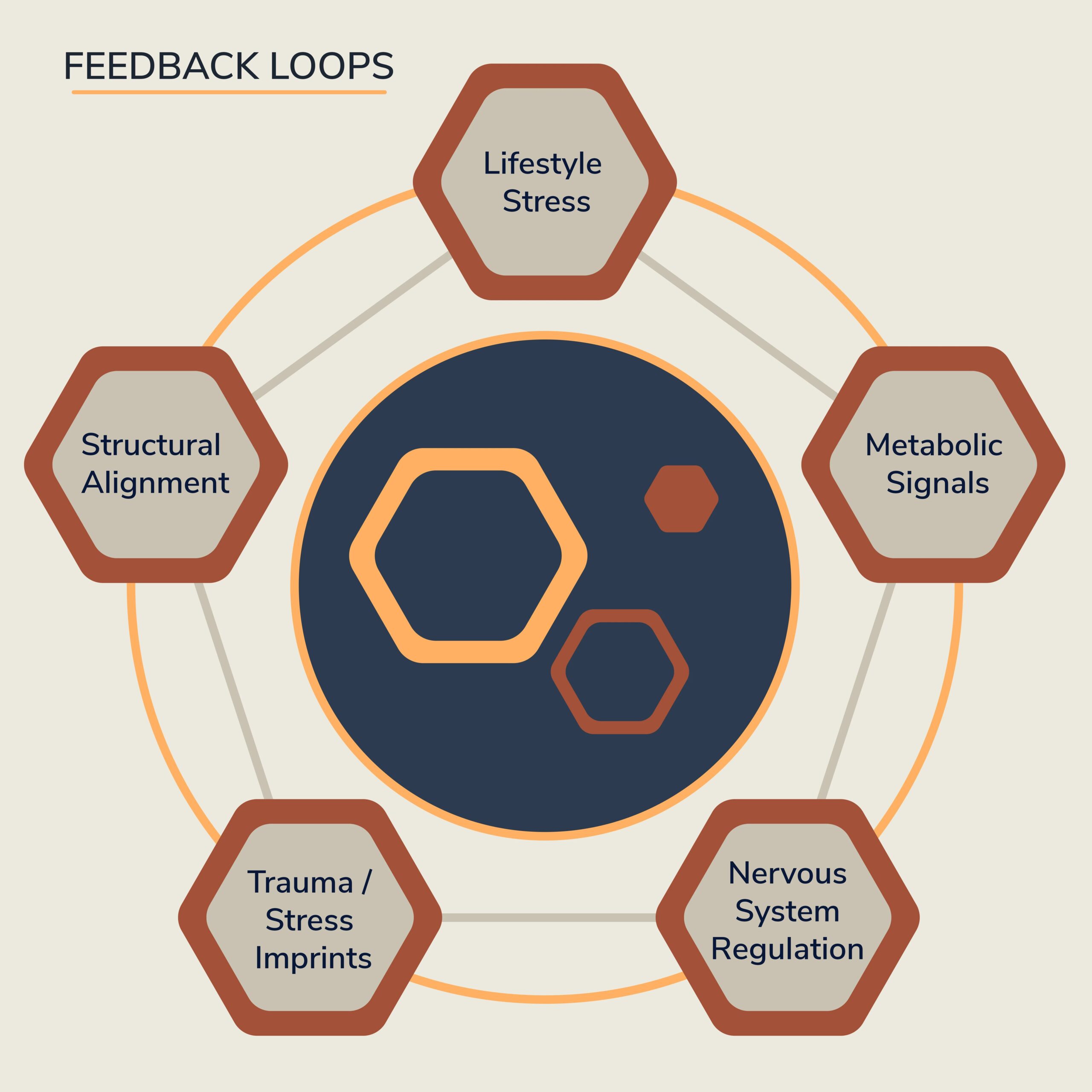
Posture, joint mechanics, muscular tension, and movement patterns influence how forces are distributed through the body. Structural imbalances may contribute to nerve irritation, pain, and compensatory movement patterns.
The nervous system regulates stress response, energy allocation, and recovery. When stress activation becomes prolonged, symptoms such as fatigue, anxiety, sleep disruption, and heightened sensitivity can emerge.
Chronic stress exposure and trauma physiology can alter nervous system tone and long-term physiological regulation.
Metabolism and immune signaling influence digestion, energy production, hormonal balance, and inflammatory responses.
Sleep patterns, environmental stressors, workload, and recovery capacity all influence physiological resilience.